Home / Insights / Machinery Moving
The Machine Landed. Leveling and Anchoring Decide Whether It Runs
CWS Rigging · October 27, 2026 · 5 min read
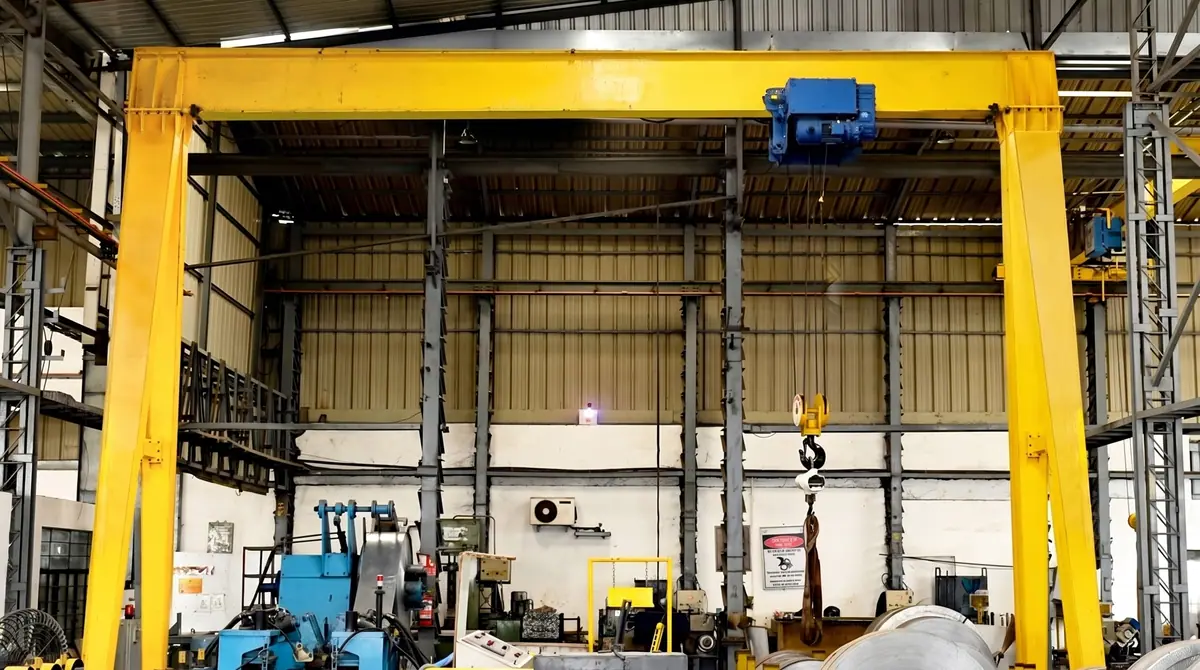
The lift is the part everybody watches. The leveling is the part that decides whether the machine makes good parts.
We've walked into plants where a machine had been in place for a year and nobody could work out why it was holding a taper it never held at the vendor. It was sitting on four of its six feet. That's it. The rigging was fine, the install was fast, and the geometry was wrong, which means every part it made was wrong in the same direction.
So these are the questions plant engineers ask us once the machine is on the floor, and the answers we give.
Does it really need to be level, or does it need to be flat?
Those aren't the same thing, and the distinction matters.
Level means in relation to gravity. Flat means the machine's own mounting points sit in one plane without twisting the frame. A machine can be dead level and still be racked, if one foot is carrying no load and another is carrying double. For most production equipment, what the builder actually cares about is that the base isn't twisted; level is how you get there and how you prove it later.
Which is why the builder's installation drawing beats any rule of thumb. If it specifies a tolerance, that number is the job. If it doesn't, we work to what the machine type needs: a precision grinder and a parts washer do not get the same treatment.
What do you measure it with?
A machinist's precision level, not a construction level and not a phone app. The common precision levels read in the range of 0.0005 to 0.001 inch per foot per graduation, which is the resolution the work needs. A four foot spirit level from the tool crib can be a thirtieth of that accurate and it will tell you the machine is fine when it isn't.
For longer beds and for anything with multiple linked sections, we use optical or laser methods instead, because a level only tells you about the span it's sitting on. On long machines you're chasing a curve, not a tilt, and you need readings at known intervals to see the shape.
One habit worth copying: record the readings. Date them, note where each reading was taken, keep the sheet with the machine. Concrete creeps, buildings settle, and a machine that drifts out over eighteen months is a mystery without a baseline and a ten minute check with one.
Why does it move after we level it?
Because you leveled a cold machine that hadn't finished settling, and then it changed.
Three things move a freshly installed machine. The frame relaxes after transport, since it has been strapped to a deck and bounced for several hundred miles. Temperature equalizes, and steel grows and shrinks with it, which is why a shop that swings 25 degrees between night and day has machines that read differently at 6 a.m. than at 2 p.m. And the grout, if it's used, cures and shrinks or expands depending on what kind it is.
That's why a proper install is two visits, not one. Rough level, let it sit, then final level. On precision equipment we'd rather come back than sign off on a reading taken an hour after the machine landed.
Do we need to anchor it at all?
Depends on what the machine does to the floor. Equipment that generates reaction forces, like presses, punches, shears and anything reciprocating, needs to be held down or it will walk and it will batter its own mounts. Equipment that mostly sits there and spins, well supported on its own feet, often doesn't.
Three cases where anchoring stops being optional:
- Reaction loads. If the machine pushes against the work, the floor takes that push. Unanchored, the machine takes it instead.
- Top heavy geometry. Tall and narrow machines, particularly with moving masses up high, need the anchors for stability rather than for forces.
- Seismic and code requirements. Some equipment has to be restrained because the building code says so, regardless of what the machine does.
What kind of anchor?
| Type | How it works | Best for | Watch out for |
|---|---|---|---|
| Cast in place | Bolt or sleeve set before the slab is poured | New foundations and pits designed around the machine | Zero tolerance for layout error; the machine has to match the drawing |
| Adhesive (epoxy) anchor | Drilled, cleaned, injected, threaded rod set in resin | Retrofits into a sound existing slab; high tension capacity | Hole cleaning is the whole job; cure time is temperature dependent |
| Mechanical expansion | Wedge or sleeve expands against the hole wall | Lighter equipment, faster installs, shallower slabs | Lower capacity in cracked concrete; needs edge distance and spacing respected |
| Isolation pads, no anchor | Machine sits on engineered pads that take the load | Equipment where vibration transmission is the problem | Only works if the machine is stable unanchored |
On adhesive anchors, the failures we see almost always trace to the hole. Drill dust left in a hole cuts the bond badly, and the cure chart is not a suggestion when the slab is cold. In a 40 degree building in January, an adhesive that cures in an hour at room temperature can need most of a shift.
Where does grout come in?
Grout's job is to transfer load from the machine's base into the foundation across the whole footprint instead of through a few high spots, and to lock the alignment you worked for. Industry guidance for grouting machinery foundations lives in ACI 351.3R, and the builder usually specifies the type.
The practical difference: cementitious grout is cheaper and fine for general equipment, while epoxy grout handles vibration and chemical exposure better and is what you see under machines with real dynamic loads. Both care about surface preparation, both care about temperature, and both are ruined by rushing.
How long before we can run production?
Honest answer: it depends on whether anything had to cure, and on how tight the geometry has to be. A bolted down machine on an existing slab with no grout can be running the same day. A machine on fresh epoxy grout with adhesive anchors is waiting on the cure, and the cure is waiting on the building's temperature.
The schedule mistake we see most often is planning the install for the last day of a shutdown. If the anchors need to cure and the machine needs to settle before final level, the last day is exactly where you don't want that work. Put it early in the window and leave yourself room to check it twice.
If you've got a machine coming in and you want it right the first time, that conversation is worth having before the equipment ships. See how we handle installation and alignment, how the machinery move itself gets planned, or tell us what's arriving.
Related: Machinery Moving services.
Have equipment that needs moving? Request a project quote or call (303) 284-6845.